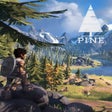
Pine places humans beneath a living animal society
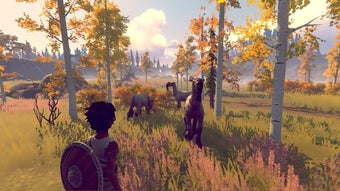
Pine, from Twirlbound, tasks you with guiding a fragile human tribe toward a safer homeland on a living island. You play Hue, exploring, gathering materials, crafting tools, and shaping relations with nonhuman societies as the island's simulation keeps moving. The design emphasizes species evolution, adaptive combat behavior, barter-based diplomacy, and gadget-like Outfindings for traversal and puzzles. It targets exploration-focused RPG players who prefer emergent systems and choices that create lasting consequences for the world.
What kind of game is Pine?
Pine is an open-world action-adventure that leans into systemic simulation rather than scripted spectacle, a cousin to titles like The Legend of Zelda in exploration tone but different in power dynamics. Humans are a weak species in this world, so play emphasizes observation, negotiation, and opportunistic tactics as much as direct confrontation. The island sim runs independently, meaning player decisions ripple through a living hierarchy of animal societies.
Does it have a multiplayer mode?
No, Pine is a single-player experience, and that focus concentrates design on emergent interspecies relations. Trading and diplomacy work through affinity gained by donating resources to tribes, which unlocks better equipment. Combat uses neural-net AI so opponents change tactics over time, and the simulation lets tribes migrate, expand, or decline without player prompting, so solitary play feels like being an agent inside an autonomous world.
What does the game look and sound like?
The art direction receives frequent praise for a colorful, vibrant palette that gives each biome a clear identity; six distinct biomes range from forests to mountains. Environmental audio and mood support exploration, and Outfindings act as tangible traversal tools that also open puzzle solutions, in the tradition of classic adventure design. The presentation helps the island feel inhabited and worth mapping by sight and sound.
Is it hard to get started?
Early progression asks players to adapt rather than brute-force success, since enemies learn from repeated patterns and tribes shift their influence. Crafting requires finding blueprints and materials, while diplomatic advancement demands resource investment to gain trust. Reported player feedback notes that combat systems are less refined compared with the world simulation, so newcomers who expect tight, immediately responsive action face a learning curve tied to the adaptive AI.
In summary, Pine rewards patient explorers but asks for tolerance of rough edges
Pine is a thoughtful choice for players drawn to emergent ecology and consequence-driven exploration, especially those who enjoy watching a simulated world evolve. It is less well suited to action-first players who prioritise mechanical polish. PlayStation 4 users should factor in reported loading and performance caveats when deciding whether their platform will deliver the intended experience.